

As a seasoned supplier of brass wire mesh, I've had the privilege of witnessing the diverse applications and unique characteristics of different weaves. Among them, plain weave and twill weave stand out as two of the most common and widely used methods. In this blog, I'll delve into the differences between these two weaves, exploring their structures, properties, and applications.
Structure
The most fundamental difference between plain weave and twill weave lies in their structures.
Plain Weave: In a plain weave, each warp wire (the wires running lengthwise) passes alternately over and under each weft wire (the wires running crosswise). This simple over-and-under pattern is repeated throughout the mesh. As a result, the wires intersect at right angles, creating a grid-like appearance. The simplicity of the plain weave makes it easy to manufacture, and it's often used for basic screening and filtering applications.
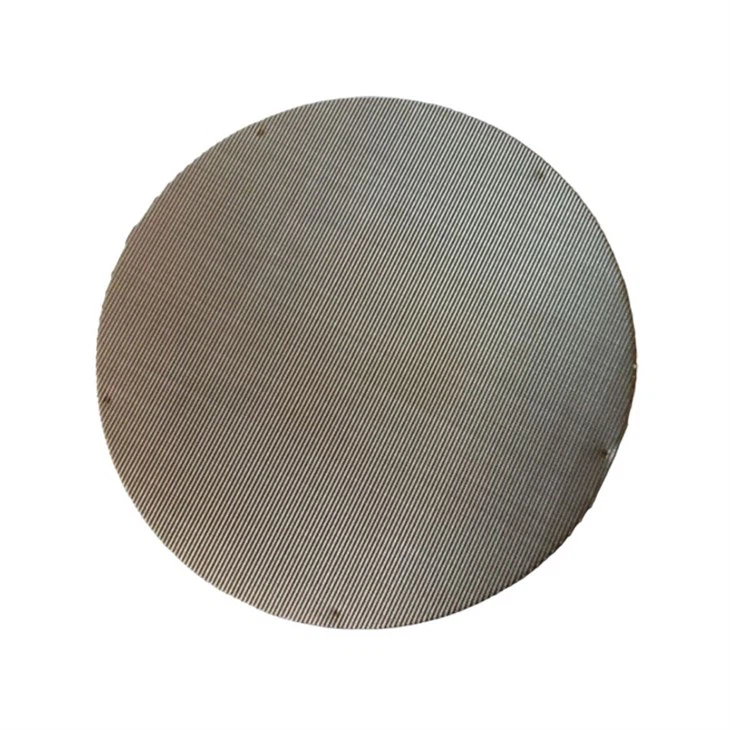
Twill Weave: A twill weave, on the other hand, is more complex. In a twill weave, the warp wires pass over and under multiple weft wires in a regular pattern, typically over two and under one or over three and under one. This creates a diagonal pattern on the surface of the mesh, which is the defining characteristic of the twill weave. The diagonal pattern gives the twill weave a more distinctive appearance compared to the plain weave.
Properties
The different structures of plain weave and twill weave also result in distinct properties.
Strength and Durability: Plain weave brass wire mesh generally has a more uniform distribution of stress, which can make it relatively strong in both the warp and weft directions. However, because the wires intersect at right angles, there is a greater potential for the wires to break or fray at the intersections, especially under heavy loads or abrasive conditions.
Twill weave brass wire mesh, with its diagonal pattern, can distribute stress more evenly along the diagonal lines. This often gives it better resistance to tearing and abrasion, making it more durable in applications where the mesh is subjected to high stress or friction. For example, in industries where the mesh is used for filtering or screening abrasive materials, twill weave mesh may last longer.
Open Area and Filtration Efficiency: The open area of a wire mesh refers to the percentage of the total area that is not occupied by the wires. In plain weave, the open area is relatively straightforward to calculate because of the regular grid pattern. The open area can be adjusted by changing the wire diameter and the spacing between the wires.
In twill weave, the diagonal pattern can result in a more complex open area configuration. Generally, twill weave can achieve a higher open area for a given wire diameter compared to plain weave. This can be advantageous in filtration applications, as a higher open area allows for greater flow rates while still maintaining a certain level of filtration efficiency. However, the diagonal pattern may also cause the particles to be filtered in a slightly different way compared to plain weave, which can affect the overall filtration performance.
Flexibility: Plain weave brass wire mesh is relatively stiff due to the right - angled intersections of the wires. This stiffness can be an advantage in applications where the mesh needs to maintain its shape, such as in rigid frames or structures.
Twill weave brass wire mesh is more flexible because of the diagonal arrangement of the wires. This flexibility makes it easier to form the mesh into different shapes, such as cylinders or cones, which is useful in applications like tubular filters or custom - shaped sieves.
Applications
The properties of plain weave and twill weave brass wire mesh determine their suitability for different applications.
Plain Weave Applications:
General Screening: Due to its simplicity and relatively uniform structure, plain weave brass wire mesh is commonly used for general screening applications, such as separating large particles from smaller ones in industries like mining, agriculture, and food processing. For example, it can be used to screen grains or minerals to remove impurities.
Decorative Purposes: The regular grid pattern of plain weave gives it a clean and neat appearance, making it suitable for decorative applications. It can be used in architectural elements, like partitions or facades, to add a touch of elegance.
Twill Weave Applications:
Filtration: As mentioned earlier, the higher open area and better durability of twill weave make it ideal for filtration applications. It is widely used in industries such as chemical processing, oil and gas, and water treatment to filter out fine particles from liquids or gases. For instance, in a chemical plant, twill weave brass wire mesh can be used to filter out contaminants from a chemical solution.
Sifting and Sorting: The diagonal pattern of twill weave can help in the sifting and sorting of materials. It can be used in industries like powder metallurgy or pharmaceutical manufacturing to separate powders of different particle sizes more effectively.
Related Products
In addition to plain weave and twill weave brass wire mesh, we also offer other types of wire mesh products. For those interested in a more robust and rigid option, our Welded Wire Mesh Fence provides excellent strength and stability, suitable for fencing and security applications.
If you need a wire mesh with a high - precision filtration ability, our Dutch Wire Mesh is a great choice. It is designed to provide fine filtration and can be used in a variety of industries, including electronics and aerospace.
For applications that require a mesh with a unique crimped structure, our Lock Crimped Wire Mesh offers enhanced stability and is often used in construction and industrial settings.
Conclusion
In summary, plain weave and twill weave brass wire mesh have their own unique structures, properties, and applications. Plain weave is simple, with a uniform grid pattern, and is suitable for general screening and decorative purposes. Twill weave, with its diagonal pattern, offers better durability, higher open area, and more flexibility, making it ideal for filtration and sifting applications.
When choosing between plain weave and twill weave brass wire mesh, it's important to consider the specific requirements of your application, such as the type of material to be screened or filtered, the level of stress the mesh will be subjected to, and the desired appearance.
If you're interested in purchasing brass wire mesh or have any questions about our products, please don't hesitate to contact us. We're here to help you find the perfect wire mesh solution for your needs.
References
"Wire Mesh Handbook" - A comprehensive guide on wire mesh manufacturing, properties, and applications.
Industry research reports on the use of brass wire mesh in different sectors.